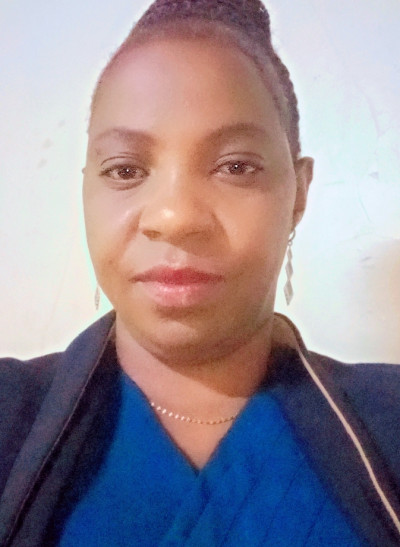
Phoebe Katumo
Details
Skills
Core Instructional Skills
STEM Subject Expertise: Mastery in delivering complex Chemistry and Biology curricula, with a proven ability to simplify difficult concepts like the mole concept and redox reactions.
Active Learning Facilitation: Expertise in designing and implementing student-centered lessons, specifically tailored for class sizes of 20 to 30 students.
Laboratory Management & Safety: Skilled in organizing and supervising practical science experiments, ensuring a safe and engaging environment for hands-on learning.
Sustainable Science Integration: Ability to incorporate real-world environmental issues, such as biomass waste conversion and circular economy principles, into the science curriculum.
Administrative & Leadership Skills
Academic Coordination: Experienced in managing school-wide academic programs and student performance tracking in the role of Director of Studies.
Collaborative Leadership: Demonstrated ability to work effectively with school administration, including principals and deputy principals, to achieve institutional goals.
Data-Driven Decision Making: Proficiency in analyzing student assessment data to improve instructional strategies and school academic standards.
Communication & Pedagogy
Trilingual Communication: Professional fluency in English and Swahili, allowing for effective communication with diverse student bodies, parents, and staff.
Classroom Management: Strong ability to maintain a productive and disciplined learning environment through established pedagogical techniques.
Curriculum Development: Skilled in aligning lesson plans with national standards while adapting materials to meet the needs of diverse learners.
About
My Teaching Philosophy
1: The "Inquiry-Based" Approach
"I believe that science is not a body of facts to be memorized, but a way of thinking to be practiced. My philosophy is rooted in inquiry-based learning, where the classroom functions as a laboratory. By guiding students to ask their own questions—such as how agricultural waste can be transformed into energy—I move them from passive listeners to active investigators. My goal is to equip students with the critical thinking skills necessary to navigate a complex, technological world."
2: The "Real-World Application" Approach
"My teaching philosophy focuses on the 'why' behind the science. I believe students learn best when they see the immediate relevance of Biology and Chemistry in their daily lives and their environment. By connecting curriculum standards to global challenges like sustainability and public health, I foster a sense of purpose in my students. I strive to create a classroom culture where academic excellence is paired with environmental stewardship and social responsibility."
3: The "Inclusive Excellence" Approach
"I believe every student is capable of mastering complex scientific concepts when provided with the right tools and a supportive environment. My philosophy centers on differentiated instruction—meeting students where they are, whether through visual simulations, hands-on experiments, or collaborative peer review. I am committed to creating an inclusive science department where diverse perspectives are valued and every student feels confident enough to pursue a career in STEM."
Profile Photo
