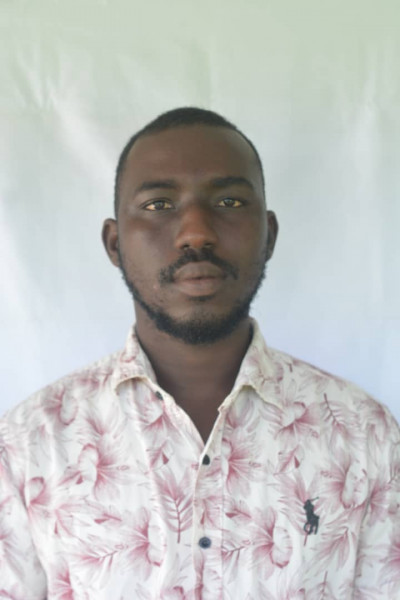
Isaac Agyemang Wireko
Details
Skills
Special Education and Inclusive Teaching
• Mathematics Instruction
• Braille Transcription and Instruction
• Differentiated and Experiential Learning
• Individualized Education Plans (IEPs)
• Classroom Management
• Assistive Technology
• Microsoft Office and Educational Technology
• Communication and Collaboration
• Critical Thinking and Problem
About
became a teacher not because I loved school as a child, but because I witnessed what happens when a child stops believing they can learn. I saw the defeat in a student's eyes when they couldn't see the blackboard, the frustration when a mathematical concept felt like a foreign language, and the silence of those who had given up asking for help. I am a dedicated and passionate Professional Special Educator and Mathematics Teacher with a strong commitment to inclusive and equitable education. My journey into teaching has been driven by a deep desire to make learning meaningful and accessible to every child, especially learners with special educational needs. I believe education is not just about imparting knowledge, but about transforming lives, building confidence, and creating opportunities for all.
My professional experience began at Wenchi Methodist Senior High School, where I served for six months during my internship as a Braille Transcriber and Mathematics Teacher. In this role, I developed skills in adapting instructional materials into Braille, ensuring that learners with visual impairment had equal access to the curriculum. This experience strengthened my understanding of inclusive education and reinforced my passion for supporting learners with diverse needs.
During my national service year at Mim Senior High School, I taught Mathematics to students who often told me, "I am just not a math person." I refused to accept that. I learned by doing alongside them, breaking down problems, using real-life examples, and showing them that mistakes were not failures but stepping stones. I watched their hands move as they solved problems on the board, their voices grow louder as they explained their reasoning, and their confidence rise as they discovered they could do it. It was not my lectures that taught them; it was their own doing.
For the past two and a half years at Akropong School for the Blind, my philosophy of "learning by doing" has become the heartbeat of my classroom. Teaching learners with visual impairment has taught me that true understanding does not come from seeing—it comes from touching, feeling, and experiencing. I have watched students trace raised-line diagrams with their fingers to grasp geometric shapes. I have heard the joy in a student's voice when they correctly solve an equation using an abacus they built themselves. I have witnessed a learner, once withdrawn and silent, stand tall and explain a concept to their peers using tactile models we created together. In these moments, I am reminded daily that disability does not limit ability; it simply asks us to teach differently, to feel deeply, and to believe unconditionally.
My teaching philosophy is simple: children learn best when they are doing. Whether it is molding mathematical shapes from clay, solving problems with their hands and voices, or transcribing their own work into Braille, I believe that knowledge becomes permanent when it is experienced. I am not just a teacher who stands at the front of a classroom; I am a guide who walks beside my students, helping them discover that they are capable of far more than they ever imagined.
I am a teacher because every child deserves to feel the joy of understanding, the pride of solving a problem on their own, and the confidence that comes from knowing they belong. I teach because I believe that with the right support, patience, and a little creativity, there is no barrier that cannot be overcome. My students have taught me that the human spirit is resilient, that hands can see what eyes cannot, and that love is the most powerful teaching tool of all.
I am committed to continuous professional development, collaboration with colleagues, and lifelong learning. My goal is to continue making a positive impact in the field of special education while empowering students to become confident, independent, and successful individuals in society.
Profile Photo
